
NBP periodically publishes short articles on nuclear energy matters which either have a geographic or topical focus. Feel free to browse through all our articles and if you would like to read on something specific, please use the search function. For example, you can search for articles relating to Africa or India or financing or SMR etc. You can also use the filter function to see articles pertaining to Asia, Africa, India or Türkiye.
India Is Building 100 GWe of Nuclear Capacity. The Fuel Question Has Not Been Answered
India has a 100 GWe nuclear target by 2047. It has the SHANTI Act opening the sector to private capital. It has Rs 20,000 crore committed to SMR deployment by 2033. The political intent is the clearest it has been in a generation. But achieving 100 GWe requires an estimated 18,000 to 20,000 tonnes of uranium annually — roughly one-third of current global production. India's domestic reserves cannot supply that.
Africa Is the World’s Most Versatile Nuclear Market. Here’s Why the Entry Window Is Closing
Africa could add 15 GW of nuclear capacity by 2035 - an estimated $105 billion investment pipeline. But size alone doesn't explain why this is the most strategically important nuclear market in the world right now. What makes Africa unique is versatility.
No Power, No Data: Why Nuclear Is the Backbone of Africa's Digital Future
Africa's data centre market is projected to reach USD 4.36 billion by 2031, driven by AI and hyperscale demand. As energy requirements intensify, nuclear energy is emerging as the most viable solution to power the continent's digital infrastructure reliably and cleanly.
Strengthening Türkiye’s Energy Sovereignty: The $65 Billion Nuclear Imperative
Türkiye is repositioning its energy strategy to mitigate a USD 65.59 billion annual import dependency by establishing a robust domestic nuclear baseload. With electricity demand projected to surge by 113 TWh by 2030, the National Energy Plan outlines a clear trajectory toward 20 GW of nuclear capacity by 2050. This shift is a commercial necessity to ensure grid stability and protect industrial competitiveness under the EU's Carbon Border Adjustment Mechanism (CBAM).
Africa’s $105 Billion Nuclear Pipeline: Bridging the Human Capital Gap
Africa is transitioning from nuclear policy to institutional execution, with a projected 15,000 MW capacity addition by 2035. While the $105 billion investment pipeline is maturing, the workforce gap remains the most significant systemic risk to project delivery.
The $12 Billion Nuclear Milestone: Bangladesh Joins the Global Atomic Club
Bangladesh is undergoing a historic energy shift, targeting 60 GWe by 2041 with nuclear power as its strategic anchor. As the Rooppur Nuclear Power Plant nears its final commissioning phase, the nation is transitioning from a construction site to a credible nuclear operator. This momentum is creating an open, multi-vendor marketplace for the country’s second 2,000 MWe facility.
Rwanda's First SMR by the 2030s
Rwanda is establishing a distinctive nuclear market by integrating Small Modular Reactors (SMRs) into its core industrial strategy. With a goal to generate up to 70% of its electricity from nuclear power, the nation is moving beyond aspiration to institutional execution. By prioritizing regulatory readiness and diverse global partnerships, Rwanda is positioning itself as a bankable proof-of-concept for the next generation of nuclear adopters.
100 GW and Open for Business: India's Nuclear Market After the SHANTI Act
The enactment of the SHANTI Act of 2025 marks a historic shift in India’s energy landscape, dismantling state monopolies to invite private capital and international expertise. By permitting 49% Foreign Direct Investment and reforming liability frameworks, India has transformed its 100 GW nuclear target into a bankable investment proposition.
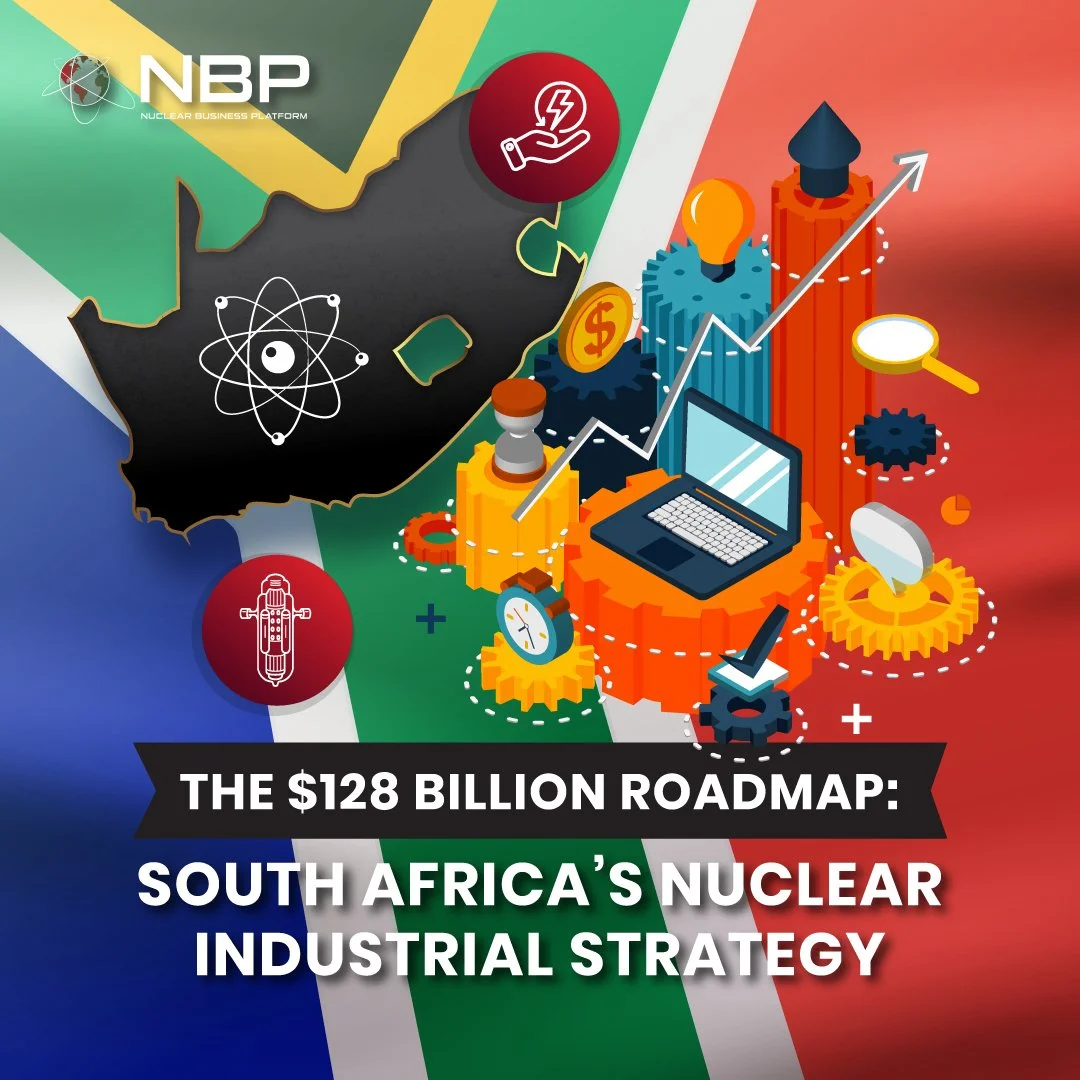
The $128 Billion Roadmap: South Africa’s Nuclear Industrial Strategy
South Africa is leveraging its 40-year track record at Koeberg to anchor a historic energy transition. With the IRP 2025 mandating 5,200 MWe of new nuclear capacity as part of a $128 billion investment plan, the nation is shifting from coal dependency to a stable, low-carbon baseload.
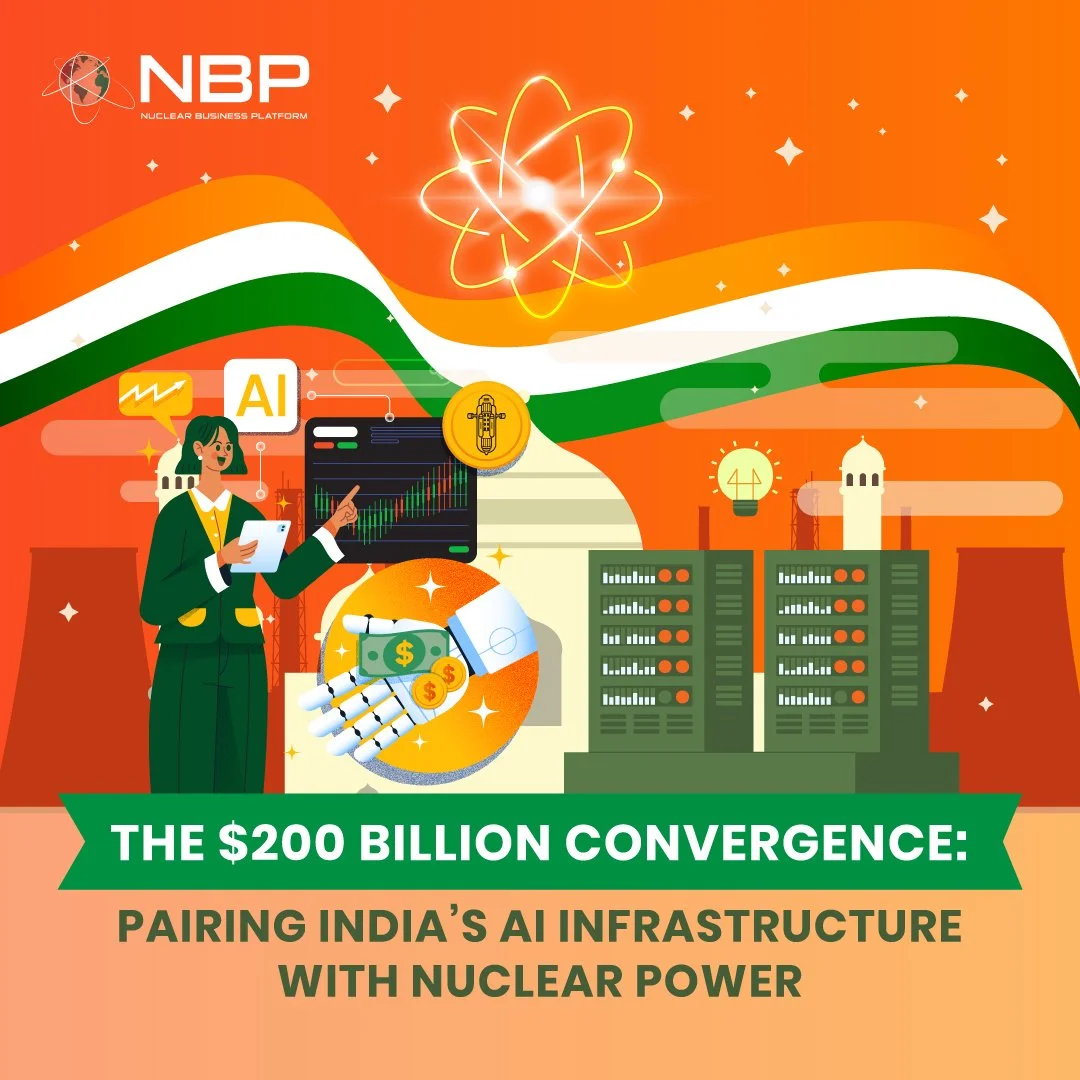
The $200 Billion Convergence: Pairing India’s AI Infrastructure with Nuclear Power
India is rapidly transitioning from an outsourcing hub to a core global AI market, with hyperscalers like Microsoft, Google, and Amazon committing over $67 billion to domestic data centers. As capacity triples to 4.5 GW by 2030, the demand for stable, high-density baseload power is positioning nuclear energy as a critical capital hedge.
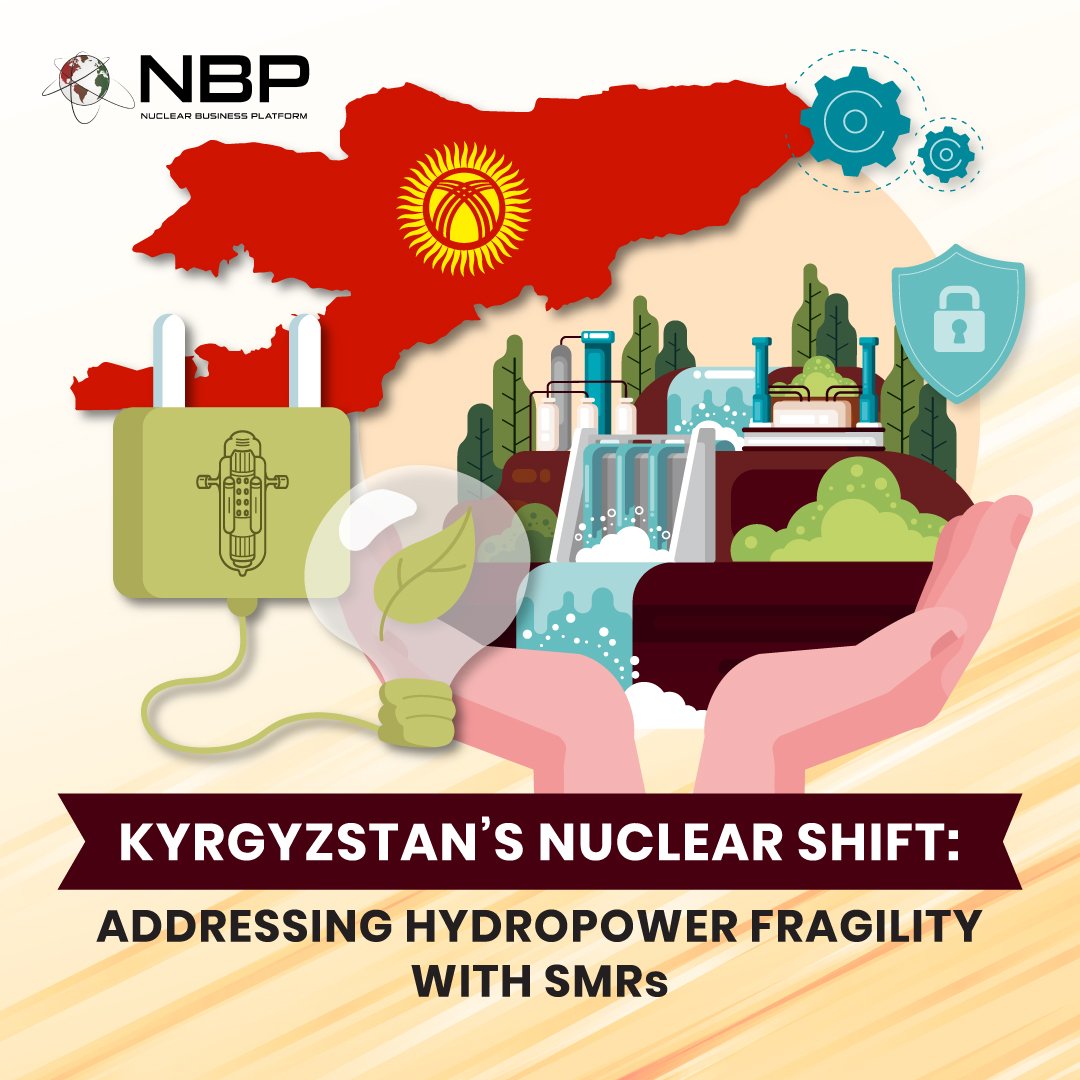
Kyrgyzstan’s Nuclear Shift: Addressing Hydropower Fragility with SMRs
Kyrgyzstan is exploring nuclear energy as a vital stabilizer for a power grid currently under extreme structural stress. With hydropower accounting for over 90% of generation, recent climate variability and recurring deficits have forced the government to seek reliable baseload alternatives. The proposed deployment of Small Modular Reactor (SMR) technology represents a strategic move toward energy sovereignty and long-term system stability.
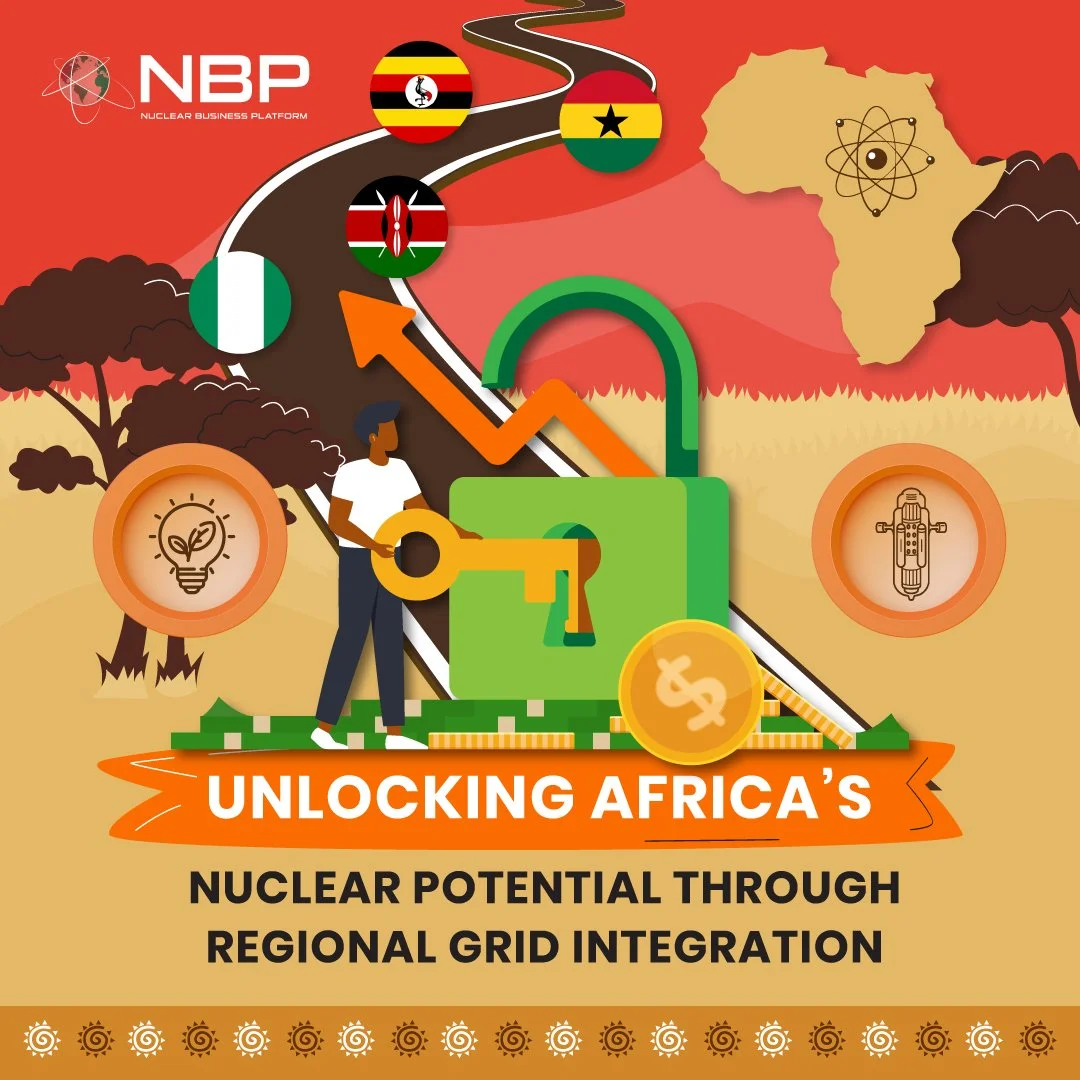
Unlocking Africa’s Nuclear Potential Through Regional Grid Integration
The future of nuclear energy in Africa is shifting from isolated national projects to a unified regional strategy. By leveraging power pools and the Africa Single Electricity Market (AfSEM), countries can overcome grid scale limitations and share the financial weight of large-scale infrastructure.
Uzbekistan’s Strategic Nuclear Pivot: Central Asia’s New Infrastructure Frontier
Uzbekistan is transforming from a regional observer into Central Asia’s most active nuclear newcomer, driven by a $115 billion economy that has outpaced its gas-dependent power grid. By pioneering a "global showcase" that pairs large-capacity VVER-1000 reactors with flexible Small Modular Reactors (SMRs), the nation is anchoring its industrial future in carbon-free baseload power.
West Africa’s $105 Billion Nuclear Frontier: From Potential to Procurement
West Africa is emerging as a cornerstone of the global energy transition, with a projected $105 billion investment opportunity through 2035. As the West African Power Pool (WAPP) moves toward full grid synchronization by mid-2026, nations like Ghana and Nigeria are pivoting to nuclear baseload to anchor their industrialization goals. This shift from speculative dialogue to "modular pragmatism" and cross-border energy sharing marks a decisive commercial inflection point for the continent.
How the African Union Can Potentially Shape Africa’s Nuclear Landscape
Africa is transitioning from nuclear aspiration to structured policy execution, with over 15 nations now advancing formal programs. As the continent targets 15,000 MW of capacity and a $105 billion investment opportunity by 2035, the African Union (AU) has emerged as a critical systems integrator. By embedding nuclear power into the Continental Power System Masterplan (CMP), the AU is ensuring that national ambitions align with regional grid stability and cross-border energy markets.
Beyond BOO: New Commercial Openings in Türkiye’s Nuclear Sector
Türkiye is rapidly transitioning from a single-project entry point to a diverse, multi-vendor nuclear marketplace. With a strategic goal of reaching 20 GW of installed capacity by 2050, Ankara is moving beyond the "Build–Own–Operate" (BOO) framework used at Akkuyu to embrace competitive partnerships for the Sinop and Thrace plants. By integrating large-scale Generation III+ reactors with a 5 GW SMR target, Türkiye is positioning itself as a premier destination for international energy infrastructure investment.
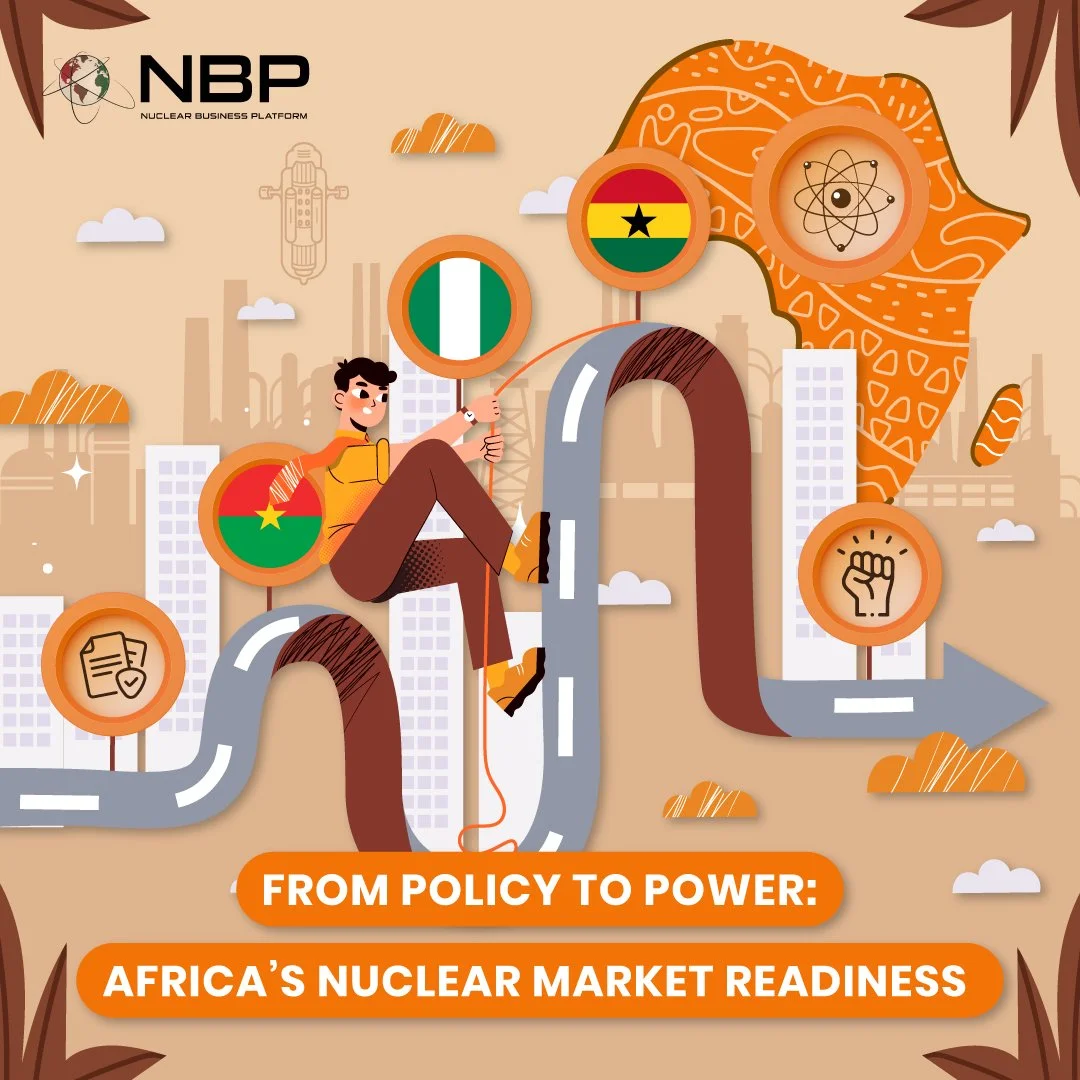
From Policy to Power: Africa’s Nuclear Market Readiness
Africa's nuclear energy sector is shifting from policy intent to institutional execution, with a projected 15 GW of capacity by 2035 representing a $105 billion investment opportunity. Nations like Ghana and Nigeria are leading this "Tier 1" expansion, converting strategic roadmaps into bankable construction-ready markets.
India’s Nuclear Budget 2026–27: What the Numbers Reveal
India’s Union Budget 2026–27 has quietly signaled a major strategic shift by removing customs duties on critical nuclear imports until 2035. Combined with the SHANTI Act’s liability reforms, New Delhi is pivoting away from state-funded construction toward a market-driven model designed to attract private capital and global technology.
Japan’s Nuclear Restart: Unlocking a 30+ GW Market for Global Nuclear Business
Japan’s nuclear landscape is undergoing a strategic shift from post-2011 caution to high-confidence execution. With a massive 33-reactor asset base and 15 restarts already operational, the focus has moved toward long-term life extensions and maximizing existing capacity to meet surging power demand from AI and semiconductor sectors.
Türkiye’s Nuclear Market After Akkuyu: A 20 GW Opportunity for Global Vendors
Türkiye is rapidly transitioning from a single-project market to a diversified nuclear powerhouse. With a target of 20 GW by 2050, Ankara is moving beyond the $20–$25 bn Akkuyu project to embrace a multi-vendor ecosystem. By integrating large-scale reactors with a 5 GW SMR mandate, Türkiye is positioning itself as a regional manufacturing hub and a destination for global technology partners.