
NBP periodically publishes short articles on nuclear energy matters which either have a geographic or topical focus. Feel free to browse through all our articles and if you would like to read on something specific, please use the search function. For example, you can search for articles relating to Africa or India or financing or SMR etc. You can also use the filter function to see articles pertaining to Asia, Africa, India or Türkiye.
Make in India Meets Nuclear Power: Opportunities for Suppliers and Manufacturers
India's 100 GW by 2047 nuclear target is a manufacturing story as much as an energy one. Fleet-mode PHWRs, 46 GW open to private and joint-venture players, 49% FDI under the SHANTI Act and factory-built SMRs create supplier orders now. Foreign vendors need Indian manufacturing partners, and the draft rules are still open for consultation.
Southeast Asia Is Buying Nuclear From Everyone
No supplier nation holds Southeast Asia's nuclear market. Russia leads in Vietnam, Korea and the US overlap in the Philippines and Thailand, and Ninh Thuan 2 is still open. Vendors should plan for non-exclusivity, partner across the value chain and claim unfilled layers.
Why South Africa Is the Anchor Point for Africa's Nuclear Buildout
South Africa is Africa's only operating commercial nuclear power producer, with four decades of experience at Koeberg, a regulator running since 1999, and a continental isotope and grid role. That makes it the natural anchor point for Africa's nuclear buildout.
Technology Sovereignty & Technology Import: Understanding India's Dual-Track Nuclear Market
India's nuclear programme runs on two complementary tracks: an indigenous thorium-based three-stage programme anchored by the PFBR, and an import track evaluating France's EPR and Russia's VVER-1200. Both serve the 100 GW by 2047 target under the new SHANTI Act, which permits 49% FDI and private participation from Tata Power, Adani, and others.
Construction Site to Operating Nation: What Akkuyu's Commissioning Changes for Türkiye's Nuclear Market
Türkiye's Akkuyu Unit 1 is entering pre-commissioning, a threshold moment that shifts the country from a construction market to an operating nuclear nation. With USD 65.59 billion spent on energy imports in 2024 and fossil fuels at 55% of generation, the plant's 4,800 MW combined capacity reshapes Türkiye's energy balance, regulatory credibility, and workforce pipeline for Sinop, Thrace, and its 5,000 MWe SMR programme.
Speed Over Scale: How Resource Scarcity Is Reshaping Southeast Asia's Nuclear Market
Southeast Asia's five active nuclear markets are competing for the same scarce pool of vendors, financiers, and trained personnel. Moving first, not having the largest capacity target, determines which country's programme actually gets executed.
Vietnam's Nuclear Partnerships: Russia, France and the Race to Build Capability
Vietnam's To Lam sought the same package from Russia and France in one week: workforce training, regulatory capacity, safety research, and technology transfer. That standardized buying criteria, plus a 30-60% local content rule for Ninh Thuan 2, opens commercial openings that don't require winning a reactor contract.
The Role of Industrial Load in Southeast Asia's Emerging Nuclear Market
Southeast Asia's nuclear reactor sizing is set by industrial load and grid geography, not national capacity targets. Indonesia's mining zones, Vietnam's data centres, and archipelagic grid constraints are driving a 50-300 MWe product market that grows independent of government timelines.
Canada's CANDU Strategy: The Nuclear Fuel Advantage for Newcomer Markets
Canada's CANDU reactor design runs on natural, unenriched uranium, removing newcomer nuclear markets' dependency on enrichment-holding states like Russia, the US, France, or China. With 12 units sold abroad and 25 operating across five countries, plus a new MOU with Turkiye's TUNAS, CANDU's fuel cycle is a genuine energy-security differentiator for first-time reactor buyers.
Southeast Asia Nuclear Market: Two Investment Pools Are Taking Shape in 2026
Southeast Asia's nuclear market splits into two distinct investment pools: a correlated mainstream light-water and SMR portfolio across five countries, and a small, uncorrelated advanced reactor licensing position.
The Western SMR Business into Asia Has a Korean Challenge
American and European SMR vendors are converging on the same handful of Korean industrial conglomerates (Doosan, Hyundai, Samsung, DL E&C) to actually build their reactors. That shared, finite manufacturing capacity, not financing or reactor design, may be the real constraint on how fast the West can respond to China's and Russia's state-backed nuclear export push.
Vietnam's Nuclear Supply Chain: How Petrovietnam Is Turning Offshore Industry into Nuclear Capability
Vietnam is converting its offshore oil and gas industry, led by PetroVietnam's PTSC, into a nuclear-grade supply chain to meet the Ninh Thuan 2 local content mandate (30-60%). That existing industrial base is a structural advantage for Korea's KEPCO bid over EDF, Westinghouse, and CNNC-CGN.
Southeast Asia's Nuclear Market Has a Constraint Money Cannot Remove
Southeast Asia's nuclear timelines are governed less by financing speed than by how long it takes to train a nuclear workforce and build a credible regulator. That non-zero-sum gap in training, simulation, and licensing advisory is open across all five markets now.
Where Will U.S. SMR Companies Find Their Next International Markets?
US SMR developers NuScale, X-energy, Holtec, and TerraPower need international contracts to offset slow domestic licensing. Southeast Asia, led by the Philippines, is the nearest opportunity; Korea and Japan supply manufacturing; Africa is the long-term frontier via Ghana. Chinese and Russian state-backed financing is the main competitive threat.
Malaysia's Nuclear Decision Will Ripple Across a $208 Billion Regional Market
Malaysia's 1.2 GW SMR pathway is a gateway to ASEAN's $208B nuclear market. First-mover status = regional reference position. NEPIO since 2011, Phase 1 IAEA groundwork complete, US MOU July 2025, PETRA feasibility underway. Fossil-reliant grid + net-zero by 2050 = strong case for firm low-carbon power.
Vietnam's Nuclear Programme: A Decade-Long Business Relationship
Vietnam has moved its nuclear programme from legislative revival to active construction in 2026: an IGA with Russia for Ninh Thuan 1, site clearance underway, a Korean financing MOU for Ninh Thuan 2, and the only completed IAEA INIR Phase 2 review in ASEAN.
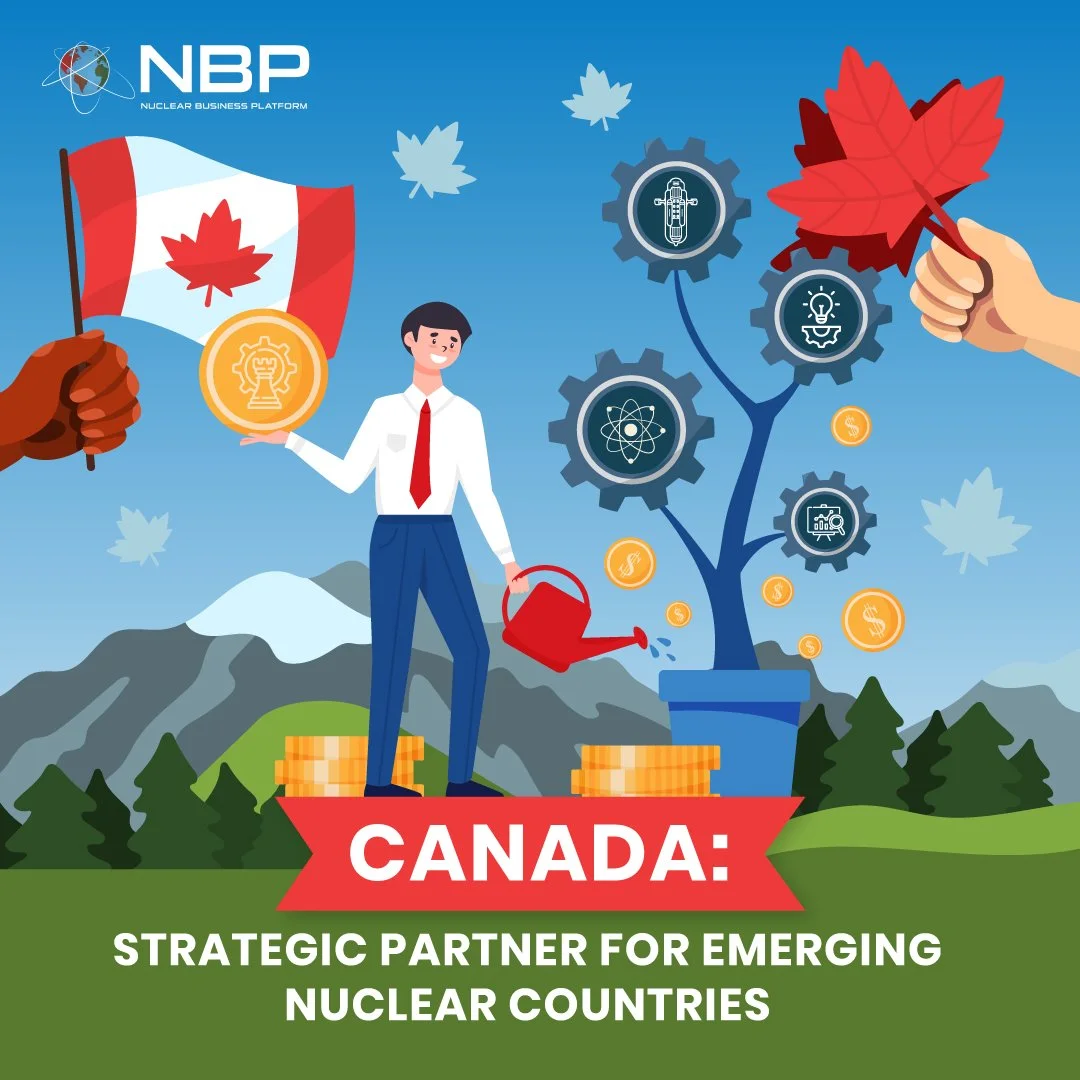
Canada: Strategic Partner for Emerging Nuclear Countries
Canada offers emerging nuclear countries more than a reactor: a proven refurbishment track record, CANDU's enrichment-free fuel cycle, an internationally respected regulator, and deep financing and workforce experience. Canada is positioning as a full-chain nuclear partner for newcomer nations.
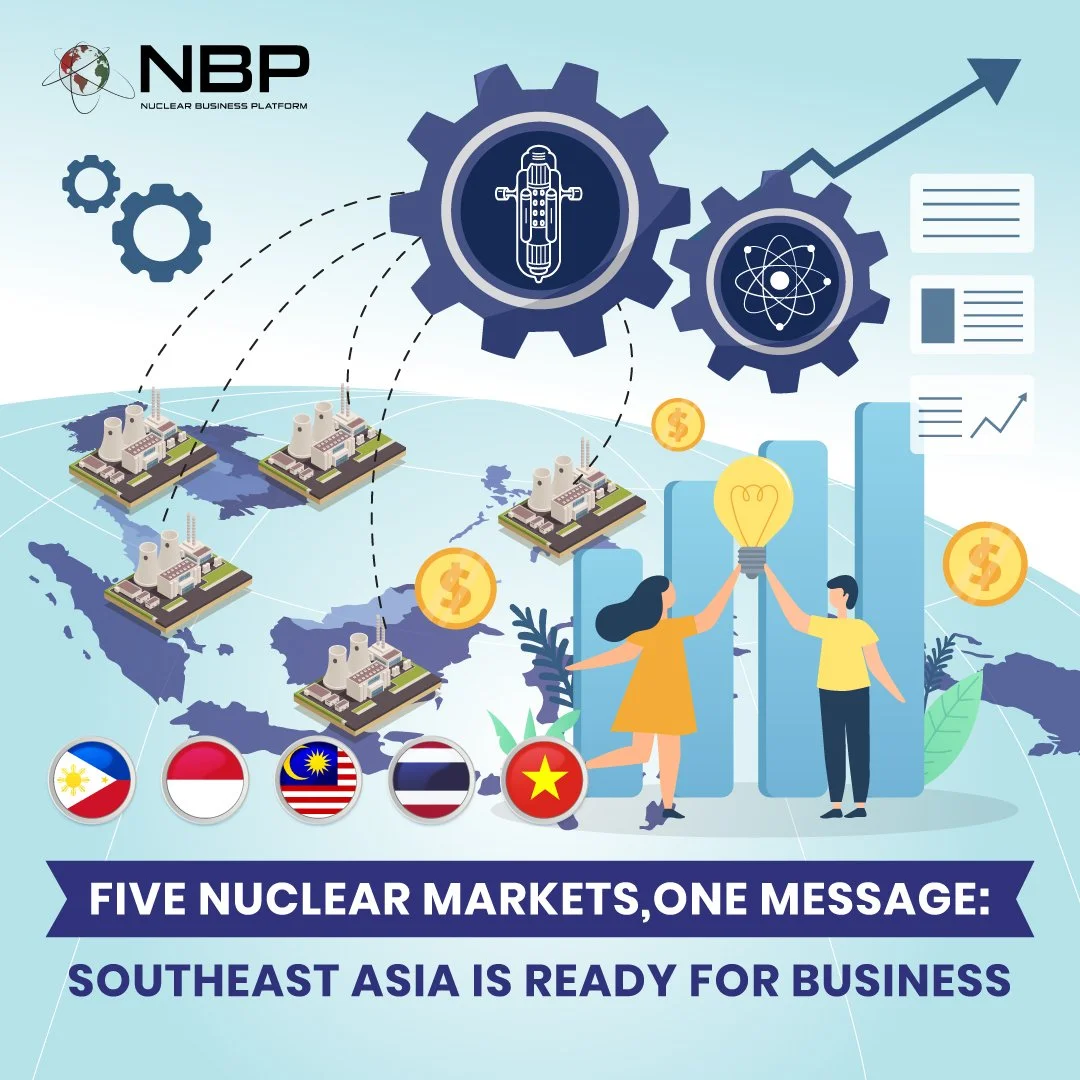
Five Nuclear Markets, One Message: Southeast Asia Is Ready for Business
Southeast Asia's nuclear market has moved from forecast to active commercial reality in 2026. Vietnam, the Philippines, Thailand, Malaysia, and Indonesia are signing binding agreements across a USD 208 billion pipeline.
Vietnam Could Be the First Country in ASEAN to Operate a Nuclear Power Plant. The Evidence Is Getting Hard to Ignore
Vietnam's nuclear programme crossed a threshold in 2026: Ninh Thuan 1 IGA with Russia (March 2026), site clearance in Khanh Hoa active, 4-party Korean MOU for Ninh Thuan 2 within months of Japan's exit, IAEA INIR Phase 2 complete (only ASEAN nation). $22B programme. Two supply chain environments open.
Why Global Nuclear Powers Are Targeting Türkiye
— all targeting Türkiye's 20,000 MW nuclear pipeline. Akkuyu (Rosatom BOO, commissioning), Sinop (US-Korea trilateral, Gen III+, first Western contract), Thrace (SPIC/CAP1400, first Chinese-tech European-adjacent reference), 5,000 MW SMR programme. 400+ companies with Akkuyu supply credentials. Geographic hub for ME/Africa/Balkans.